
Last weekend left me convinced I was back where I’d started. This week, therapy gave me a different way of looking at it. If you read my previous post, Weekends Have Become the Hardest, you’ll know just how much I struggle when Friday rolls into Saturday. During the week, therapy gives me structure, purpose and, most importantly, progress. Then the weekend arrives and it can feel as though everything I’ve achieved is swept away in a matter of hours.
After another difficult weekend, I went into therapy convinced I was simply being pushed back to where I’d started. I was frustrated that every week seemed to end in the same place, leaving me wondering whether I was making any progress at all.
My therapist offered me an analogy that has stayed with me.
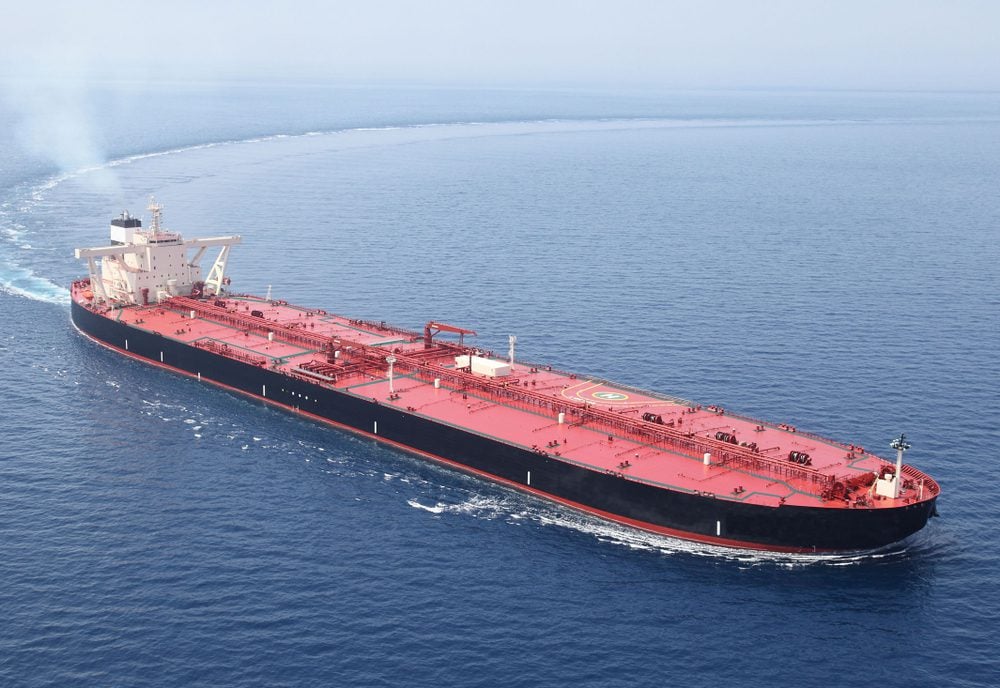
Recovery, she said, is like turning an oil tanker.
An oil tanker doesn’t change direction quickly. You don’t spin the wheel and watch it immediately head off towards a new horizon. The turn is slow—so slow that, for quite some time, it can look as though nothing is happening at all. But if the helm stays steady, the ship continues to turn, almost imperceptibly, until one day you realise it is pointing somewhere completely different.
That feels remarkably like where I am.
Every therapy session, every difficult conversation, every moment of understanding myself a little better, and every occasion where I choose compassion over criticism is another tiny adjustment of the wheel. None of those moments feels life-changing on its own, and there are plenty of days when I leave therapy wondering whether we’ve achieved anything at all. Yet, somehow, they are all contributing to the same gradual change in direction.
The problem is that my recovery doesn’t happen in calm water.
During therapy, we also talked about why weekends affect me so profoundly. They are when the structure disappears, the loneliness becomes louder, and my mind has the space to revisit old wounds. If the oil tanker is my recovery, then the weekend feels like a powerful current pushing against it.
When that current hits, it can feel overwhelming. The anxiety rises, my mood drops, the intrusive thoughts become louder, and I can almost convince myself that I’ve been carried all the way back to the beginning. In those moments, it’s easy to believe that everything I’ve worked so hard for during the week has been undone.
But that’s the illusion.
A strong current can slow an oil tanker. It can push against it, make the journey harder and force the captain to work even harder at the wheel. What it can’t do is instantly undo the turn that has already begun.
That realisation hasn’t made the weekends easier, but it has made them make sense.
The weekends are still incredibly hard. They still leave me exhausted, and I know there will be more difficult ones ahead. I’m not pretending that understanding the analogy somehow makes the anxiety disappear. It doesn’t.
What it does change is how I interpret those difficult days. They no longer have to define my progress. The strong currents and waves will still come—some stronger, some weaker—but they don’t determine my direction.
Instead of seeing a hard weekend as proof that I’ve failed, I’m beginning to see it as proof that recovery isn’t linear. I’m trying to see it for what it really is: resistance. The current is fighting against the direction I’m trying to travel, but it isn’t deciding where I’m ultimately going.
Instead, I’m learning that recovery is measured in degrees, not revolutions.
The ship keeps turning, even when I can’t see it.
The current keeps pushing me, but it doesn’t get to choose my destination.
And despite the waves, despite the storms, I’m still heading in the right direction.