
Today has been pretty much what I expected. Not catastrophic. Not amazing. Just emotionally uneven in a way I’m slowly beginning to recognise.
I woke up still feeling more positive than I expected after the weekend. And oddly, that itself made me anxious. I’m so used to emotional crashes after periods of vulnerability or social exposure that part of my brain keeps waiting for the collapse:
“This won’t last.”
“You’ll feel terrible soon.”
“Don’t trust it.”
And perhaps the truth is that both things can exist at once:
hope and exhaustion.
Because today I can feel my emotional reserves running lower.
The heat in the UK has been brutal, I didn’t sleep particularly well, and I think the emotional intensity of the weekend has finally started catching up with me. I’ve had a couple of darker intrusive thoughts drifting through my head today — the old:
“What’s the point?”
“This will all fail eventually.”
kind of thinking.
Just the familiar voice of exhaustion and hopelessness trying to creep back in when my system is depleted.
And honestly, Spoon Theory explains my life better than almost anything else.
For people who don’t know it, Spoon Theory is a way of describing limited physical and emotional energy. Everyone starts the day with a certain number of “spoons,” and everything you do costs some of them.
The thing is, I don’t think I start the day with a full allocation.
HIV takes spoons. AVN and chronic pain history take spoons. Depression takes spoons. Hypervigilance takes spoons. Trauma takes spoons. Poor sleep takes spoons. A stressful job takes spoons.
And that’s before I even begin trying to:
- heal,
- grow,
- socialise,
- flirt,
- travel,
- attend queer spaces,
- or reconnect with life.
One thing I’m slowly learning is that my emotional capacity is finite.
If I push myself into challenging situations — even positive ones — it uses energy. Sometimes enormous amounts of it. Which means recovery and deeper self-care afterwards are not weakness or avoidance. They’re maintenance.
I think for years I interpreted exhaustion as failure:
“You can’t cope.”
“You’re weak.”
“Other people can do this.”
But perhaps the truth is simpler:
I’ve been running survival software in the background for decades.
And today I noticed something else too.
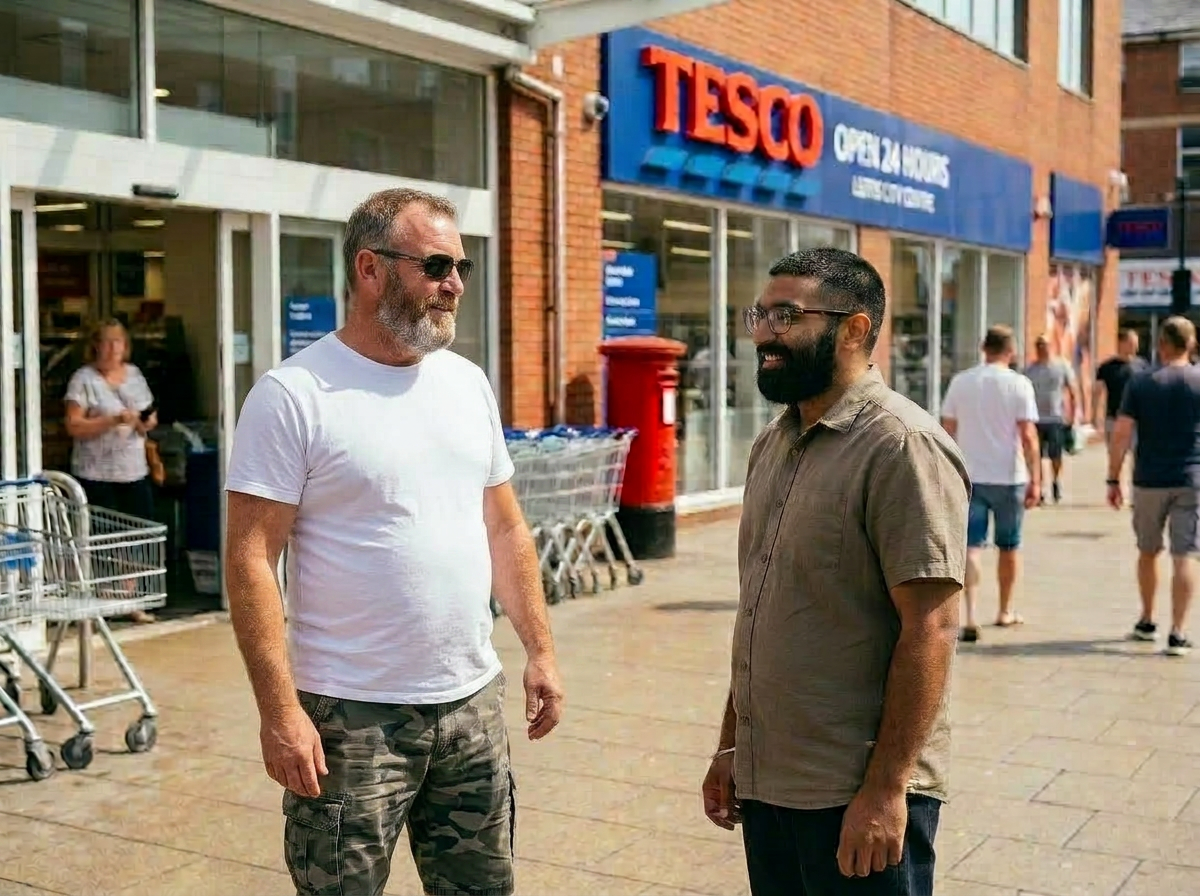
I dropped the hire car off this morning and wandered over to ASDA to pick up some linen shirts because this country has apparently transformed into the surface of the sun.
While walking in I passed a younger bearded desi guy coming down the ramp. I’ll admit it — I checked him out a little. Gorgeous black beard. Exactly my type.
Normally I keep my head down in public. Don’t look too long. Don’t draw attention to myself. Don’t invite risk.
But this time I looked.
And I’m pretty sure he looked back for slightly longer than people normally do.
Now, because my brain is my brain, I’ve spent part of the day re-analysing the interaction:
- Was he checking me out?
- Was he uncomfortable?
- Were my sunglasses not as dark as I thought?
- Did I misread it completely?
But what’s important is this:
at the time, I think it actually felt… nice.
And perhaps even stranger than that, I realised afterwards that I hadn’t been monitoring my surroundings as intensely as I usually do. Normally I track everyone around me constantly. Hypervigilance has been part of my personality for so long that people used to call me “Auty Matt” when I was younger because I was always the sensible one keeping an eye on everything.
Today, for a few moments, I wasn’t doing that as intensely.
And rather than simply enjoying that, my brain immediately translated it into:
“You were careless.”
“You weren’t safe.”
“You should have been paying attention.”
That’s what long-term hypervigilance does. It makes ordinary presence feel irresponsible.
The sad truth is that some horrible people and circumstances stole parts of my life from me. Not all of it. But enough to leave scars in how I move through the world.
And perhaps one of the hardest things is recognising that the rebuilding process feels very one-sided at times.
So much of recovery advice boils down to:
“You must push yourself.”
“You must initiate.”
“You must expose yourself to discomfort.”
“You must do the work.”
And yes, I understand why.
It feels unfair that the damaged people are also expected to carry so much of the burden of rebuilding connection while the more established and socially confident crowd often remain comfortably passive.
I don’t think most people are cruel.
I think most people are simply busy existing inside their own lives.
But for those of us standing at the edge of rooms trying desperately to work up the courage to step in, it can feel painfully lonely.
Still… despite all of this, something does feel different after this weekend.
Not healed. Not transformed. But perhaps slightly more open to life.
I’m looking at cars.
Thinking about travel.
Looking at events.
Daydreaming sexually.
Noticing people.
Thinking about community.
Imagining possibilities.
Even if it all still frightens me.
Operation Restoration continues.
Slowly.
Messily.
One spoon at a time.