
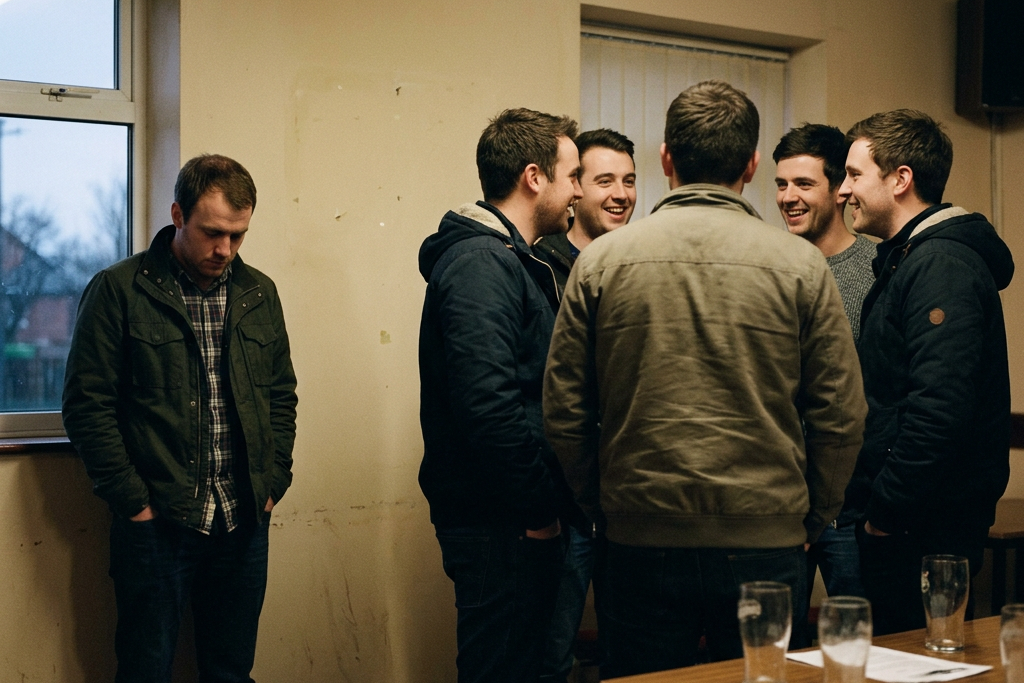
Last night I found myself reflecting on my past friendships, and I noticed something that honestly surprised me.This isn’t really a negative reflection, or an angry one. It’s more that I’m finally trying to understand certain patterns in my life properly — not to dwell on them, but because I want the future to look different.
Throughout my life, I’ve never really had huge groups of friends. At school there were two close friends. Outside school, again, maybe two. University was the exception because shared hobbies naturally created larger circles for a while, but even then the genuinely close connections were still only a handful. Now, at 50, I’m back down to maybe two people I’d truly call friends.
And looking back, I can see the same role repeating over and over again.
I was often the “agony aunt” of the group. The mature one. The safe pair of hands. People came to me with problems, asked for advice, unloaded emotional baggage, trusted me to calm situations down, organise things, make sure everyone got home safely, help deal with drama, hold things together.
I became dependable. Useful. Reliable.

And truthfully, I don’t resent that. There’s something meaningful in being someone people feel safe with. I think a lot of my life experiences — the difficult ones included — made me emotionally aware quite young. I became good at reading people, supporting people, and stabilising situations.
But while people often knew what I could do for them, I’m not sure many ever really knew me underneath it all.
I don’t think I’ve ever truly been able to pour my heart out to friends in the same way they did to me. If I hinted I was struggling, the response was often surface level — kind, but brief. “You’ll be okay.” “It’ll work out.” Then the conversation would move on before I could really unpack anything deeper.
And if there was something I wanted to do? Somewhere I hoped people might come with me? It often felt easier for others to say no, despite how often I’d shown up for them over the years.

For a long time I thought this pattern was connected mainly to my health issues. When I became ill, I realised how uncomfortable many people are with difficult realities — illness, depression, grief, trauma. A lot of people simply don’t know how to engage with those things for long before retreating back to safer, lighter conversations.
But now I can see the pattern existed long before that.
I think some people are naturally drawn to emotionally supportive people because we make life feel safer and easier for them. We listen. We absorb stress. We help regulate situations. We carry emotional weight without making it visible.
The problem is that relationships built around one person always being “the strong one” can quietly become unbalanced.
And I don’t even think most people do this consciously. Many people simply haven’t had to develop emotional depth in the same way. They’ve been fortunate enough not to experience trauma, abandonment, serious illness, or the kind of life events that force you to become emotionally resilient very young.
In some ways, they’re lucky.
Truly lucky.
Because they’ve never had to learn how quickly people disappear when life gets difficult.
What I’m taking from all of this isn’t bitterness — it’s clarity.
At 50, I’m becoming more intentional about the kinds of friendships and connections I want in my life going forward. I still want to support people. I still want to be caring, dependable, generous with my time and energy. That part of me isn’t changing.
But I also need reciprocity now.
I need friendships where support flows both ways. People who ask questions and genuinely wait for the answer. People who can sit with difficult conversations without trying to immediately smooth them away. People who don’t only appear when they need something.

And I probably need to become more direct too.
If I feel someone only reaches out when they want emotional support, favours, or company on their terms, I need to acknowledge that instead of automatically excusing it away. If I feel unseen in a friendship, I need to say so. Not aggressively, not cruelly — just honestly.
Because being kind shouldn’t require disappearing yourself in the process.
So this reflection isn’t really about sadness. It’s about growth. About understanding myself more clearly, recognising old patterns, and trying to build healthier, more balanced connections in the future.
Not closing doors.
Just choosing more carefully who gets keys.